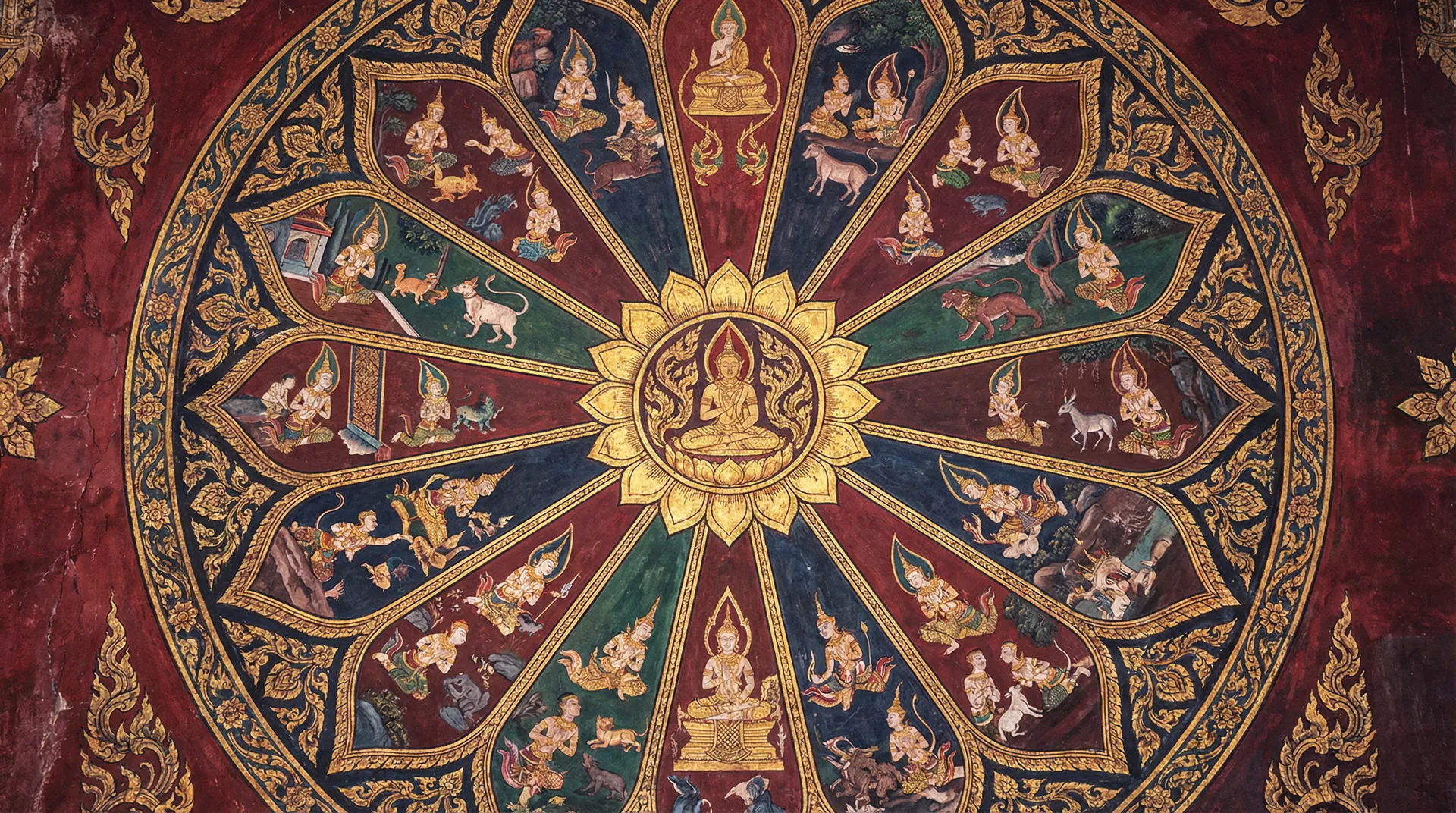
Vessantara Jātaka
Vessantara Jātaka
In the prosperous kingdom of Siwi, ruled the benevolent King Sanjaya. His queen, Phusati, was as virtuous as he, and together they reigned with wisdom and compassion. Their son, Prince Vessantara, was renowned throughout the land for his extraordinary generosity. He believed that giving was the greatest virtue, and his heart overflowed with compassion for all beings.
One day, a delegation of Brahmins arrived at the palace, their faces etched with hardship. They pleaded with the king for rain, as their lands were parched and their crops withered. King Sanjaya, though sympathetic, explained that he had no control over the weather. However, Prince Vessantara, overhearing their plight, felt his heart ache. He approached the Brahmins and, without a second thought, offered them his magnificent white elephant, a symbol of his kingdom's prosperity and a creature believed to possess the power to bring rain.
The Brahmins rejoiced, believing their prayers were answered. However, when the king learned of his son's gift, he was dismayed. The white elephant was not just a symbol; it was a vital asset that ensured the kingdom's well-being and its ability to attract rain. He reprimanded Vessantara, reminding him of his responsibilities as a prince.
Undeterred, Vessantara continued his practice of boundless giving. He gave away chariots, horses, jewels, and even his own possessions. His wife, Princess Maddi, though initially concerned, supported her husband's compassionate nature, understanding his deep-seated desire to alleviate suffering.
The climax of Vessantara's generosity came during a drought that struck the kingdom of Kalinga, which was suffering immensely. A poor Brahmin named Jujaka, desperate for a servant, approached Prince Vessantara, who was residing in a forest hermitage after being exiled from his kingdom due to his excessive giving, which was deemed a threat by some officials. Jujaka, hearing of Vessantara's famed generosity, begged for two of his children, Jali and Kanhā Jinā, to be his servants.
Prince Vessantara, despite his deep love for his children and the pleas of Princess Maddi, felt compelled by his vow of generosity. He believed that giving away his children, the dearest possessions he had, would be the ultimate act of charity and would bring immense merit. He handed over his beloved son and daughter to the cruel Jujaka.
Princess Maddi, heartbroken and distraught, searched for her children. She encountered the god Sakka, disguised as a hunter, who, moved by her sorrow, returned her children to her. Later, King Sanjaya, the prince's father, learned of his son's extreme sacrifice. Overcome with pride and remorse for having exiled his son, he journeyed to the forest hermitage to bring Vessantara and his family back to the kingdom.
Upon their return, Prince Vessantara was hailed as a hero, his immense generosity finally understood and celebrated. He continued to live a life dedicated to giving, inspiring his people to cultivate compassion and generosity in their own lives. The story of Vessantara became a powerful lesson, illustrating the profound spiritual merit and ultimate liberation that can be attained through the practice of perfect generosity, even when it involves the most difficult sacrifices.
— In-Article Ad —
💡ၶေႃႈသွၼ်
ปัญญา ย่อม เอาชนะ ความ อาฆาต พยาบาท ได้ การ เสียสละ เพื่อ ส่วนรวม เป็น คุณธรรม อัน ประเสริฐ
ပႃႇရမီႇ: วิธูรบัณฑิต ได้ บำเพ็ญ บารมี คือ ปัญญาบารมี และ ขันติบารมี
— Ad Space (728x90) —
ၸႃႇတၵဢၼ်ၼႃႈသူၼ်ၸႂ်
 144Ekanipāta
Maca Hamsa Jataka
The Tale of the Golden Swan King In the realm of the Himalayas, amidst snow-capped peaks and crystal...
💡 ปัญญาและความดีงาม สามารถเอาชนะความโลภและความโหดร้ายได้
 216Dukanipāta
ၼႃလၵ်း ၵျေႃး ၵႄ
ၵႄႊၵႄႊ ၵႄႊ ၵႄႊ ၵႄႊ ၵႄႊ ၵႄႊ ၵႄႊ ၵႄႊ ၵႄႊ ၵႄႊ ၵႄႊ ၵႄႊ ၵႄႊ ၵႄႊ ၵႄႊ ၵႄႊ ၵႄႊ ၵႄႊ ၵႄႊ ၵႄႊ ၵႄႊ ၵႄႊ ၵႄႊ ၵႄႊ ၵ...
💡 ปัญญาประเสริฐกว่าทรัพย์สิน การใช้ทรัพย์สินต้องมีสติและธรรม
160DukanipātaRohana Jataka
Rohana JatakaIn the ancient city of Ujjeni, a hub of trade and culture, lived a wealthy merchant nam...
💡 ความสุขที่แท้จริง ไม่ได้อยู่ที่ปริมาณของทรัพย์สมบัติ แต่ขึ้นอยู่กับการรู้จักใช้สิ่งที่มีอยู่ให้เกิดประโยชน์สูงสุดต่อตนเองและผู้อื่น การมีจิตใจที่เปี่ยมด้วยเมตตาธรรม และการดำเนินชีวิตตามหลักธรรมคำสอน ย่อมนำมาซึ่งความเจริญรุ่งเรืองและความสงบสุขที่ยั่งยืน
211Dukanipātaဢ㇏ ဢ㇏ ဢ㇏ ဢ㇏ ဢ㇏ ဢ㇏
ၵ㇏ ဢ㇏ ဢ㇏ ဢ㇏ ဢ㇏ ဢ㇏ ဢ㇏ ဢ㇏ ဢ㇏ ဢ㇏ ဢ㇏ ဢ㇏ ဢ㇏ ဢ㇏ ဢ㇏ ဢ㇏ ဢ㇏ ဢ㇏ ဢ㇏ ဢ㇏ ဢ㇏ ဢ㇏ ဢ㇏ ဢ㇏ ဢ㇏ ဢ㇏ ဢ㇏ ဢ㇏ ဢ㇏ ဢ㇏ ဢ㇏ ဢ㇏ ဢ㇏ ဢ...
💡 ความพยายามในการสรรหาและสร้างสรรค์สิ่งที่ดีที่สุดอาจนำมาซึ่งความสำเร็จ แต่ก็ยังมีสิ่งที่เหนือกว่าที่ต้องเรียนรู้และยอมรับ
 493Pakiṇṇakanipāta
Lūm Wai Lǣng Hūm Mǟng
Na Hūm Mǟng Lǣng Lǣng Hūm Mǟng, Hūm Mǟng Lǣng Lǣng Hūm Mǟng Nǣng Lǣng Mǟng Hūm Lǣng Lǣng. Hūm Mǟng L...
💡 Hūm Mǟng Lǣng Lǣng Hūm Mǟng Nǣng Lǣng Mǟng Hūm Lǣng Lǣng Hūm Mǟng Lǣng Hūm Mǟng Lǣng Lǣng Hūm Mǟng Nǣng Lǣng Mǟng Hūm Lǣng Lǣng Hūm Mǟng Lǣng Hūm Mǟng Lǣng Lǣng Hūm Mǟng Nǣng Lǣng Mǟng Hūm Lǣng Lǣng.
 283Tikanipāta
ၵၼ်ႇၵွၼ်ႇၵၼ်ႇ ဢၼ်ႁၵ်ႉၵၼ်ႇ
ၼႂ်းၵႄႈၸွမ်း ဢွၼ်ႇ ၵၼ်ႇ ဢၼ်ႁၵ်ႉၵၼ်ႇ ဢၼ်ႁၵ်ႉၵၼ်ႇ ဢၼ်ႁၵ်ႉၵၼ်ႇ ဢၼ်ႁၵ်ႉၵၼ်ႇ ဢၼ်ႁၵ်ႉၵၼ်ႇ ဢၼ်ႁၵ်ႉၵၼ်ႇ ဢၼ်ႁ...
💡 การให้ทานอย่างแท้จริง คือการสละสิ่งที่อันเป็นที่รักยิ่ง หรือสิ่งที่มีค่ามากที่สุด เพื่อประโยชน์สุขของผู้อื่น การบำเพ็ญทานบารมี ย่อมนำมาซึ่งความสุขความเจริญ และเป็นหนทางสู่การหลุดพ้น
— Multiplex Ad —